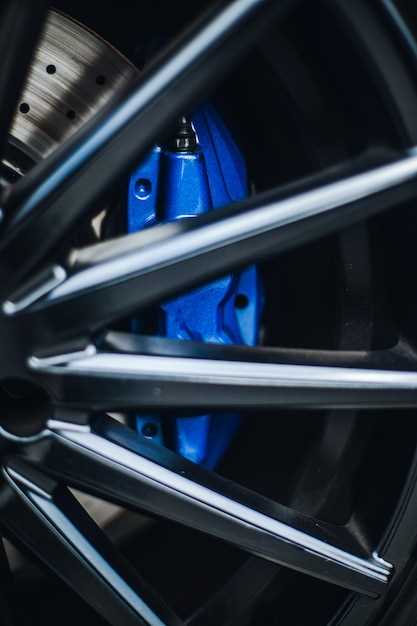
For optimal vehicle capability, precise adjustments to settings are paramount. Custom configurations significantly enhance responsiveness and overall capability, allowing for an exhilarating driving experience. By focusing on specific parameters, you can achieve marked improvements in acceleration, throttle response, and fuel efficiency.
Making alterations to parameters not only boosts performance metrics but also tailors the driving experience to personal preferences. Whether prioritizing power or comfort, these modifications can markedly change how the vehicle behaves on various terrains. Analyze your driving habits and select settings that complement your style for a more engaging ride.
Regularly updating these configurations can lead to sustained improvements, ensuring the vehicle remains aligned with your evolving needs. Investing time in understanding these specifications will yield significant benefits, making your vehicle more responsive and enjoyable. Keep refining your approach for the best possible performance on every drive.
How Engine Mapping Influences Throttle Response and Power Delivery

Tuning parameters significantly affect throttle response and power delivery. Adjustments in these settings can lead to a more immediate power response or a smoother, gradual increase.
Optimizing the air-fuel mixture is critical for improving acceleration. If the mixture is too rich or too lean, it can result in lag or unwanted power drops.
Consider the following aspects:
- Ignition Timing: Advancing ignition timing can enhance throttle response by optimizing combustion efficiency.
- Fuel Maps: Customizing fuel maps helps achieve the desired power output across various engine speeds.
- Boost Levels: In turbocharged engines, adjusting boost levels can dramatically alter power delivery characteristics.
Throttle response can be fine-tuned through various methods, including:
- Adjusting the throttle position sensor calibration.
- Modifying the drive-by-wire settings for a more linear response.
- Implementing adaptive learning strategies in the software to improve real-time reactions.
Every vehicle behaves differently based on its electronic controls. Therefore, understanding how each component interacts is key for maximizing performance. Use a reputable tuning software that allows real-time adjustments and logging for detailed analysis.
Regularly reevaluate the performance metrics to ensure optimal settings align with driving preferences. Consider the purpose of the vehicle, whether for everyday use, track performance, or off-road capabilities, tailoring the setup accordingly.
Analyzing Fuel Efficiency Through Custom Engine Mapping Techniques
For optimal fuel consumption, precise adjustments to the vehicle’s parameters are crucial. Focus on the air-fuel ratio first; leaner mixtures can enhance mileage. Aim for a target of 14.7:1 for optimal performance under cruising conditions.
Next, examine ignition timing. Advancing the spark timing can improve combustion efficiency. However, monitor for pre-ignition; a balance must be achieved to prevent knock while enhancing output. Experiment with 1-3 degrees of advance in small increments.
Tuning boost levels is another avenue that can yield gains in fuel economy. Reducing turbo pressure while maintaining engine power can significantly reduce fuel usage. Consider a 5-10% decrease to test efficacy without sacrificing responsiveness.
Additionally, consider optimizing the throttle response. Mapping the throttle position sensor to ensure a smooth power delivery leads to lower emissions and enhanced fuel handling. Focus on a linear transition in mapping for better driver control.
Lastly, the choice of fuel can contribute substantially. Use higher octane fuels where feasible; they typically burn cleaner and support higher compression ratios, which can enhance thermal efficiency and reduce consumption.
By implementing these targeted strategies, substantial improvements in fuel efficiency are achievable. Each adjustment should be tracked through comprehensive data logging to assess real-world results accurately.
Evaluating Performance Gains from Engine Mapping Adjustments in Real-World Driving

To achieve substantial performance enhancements, focus on specific tuning parameters such as fuel delivery, ignition timing, and boost levels. Adjusting these factors can yield noticeable improvements in responsiveness and power output.
Monitoring data from actual road conditions reveals that optimizing fuel maps can lead to more efficient combustion, resulting in both increased horsepower and torque. This is particularly beneficial for vehicles requiring improved acceleration in urban settings.
Consider a case study involving a turbocharged vehicle. By recalibrating the boost pressure and timing, drivers observed a 15% increase in acceleration times from 0 to 60 mph. These modifications also contributed to smoother throttle response, enhancing overall drivability during everyday traffic scenarios.
Another key aspect is addressing the air-fuel ratio (AFR). Fine-tuning the AFR can improve fuel efficiency and engine longevity while providing a more enjoyable driving experience. Ideal AFR adjustments typically fall within a range that maximizes both performance and fuel economy.
It’s advisable to utilize dynamometer testing to quantify performance changes, ensuring that adjustments yield the desired gains without compromising reliability. Regular monitoring of performance metrics post-tuning is essential for maintaining optimal conditions.
Taking into account the specific driving habits and conditions of each vehicle owner will provide tailored adjustments that maximize gains. This bespoke approach allows for a more harmonious balance between power and efficiency on the road.